

Krantz A Primer Of Mathematical Writing Pdf
1. Some Documents Containing Advice

The following are a few (fairly detailed and lengthy) documents that contain advice about specific aspects of your graduate career.
After the Master's degree and before the Ph.D.
This is a Guide for Ph.D. Candidates in Mathematics that I wrote for graduate students shortly after earning my Ph.D. It contains advice for graduate students in mathematics during the period of time after they pass qualifying exams (or preliminary exams) and before receiving their Ph.D. In it you will find suggestions on such topics as choosing an advisor, beginning to conduct research, writing up results, and submitting papers for publication.Having a Grand Project
I gave a talk at the UH Math Department's Graduate Student Seminar advocating that every graduate student have a "Grand Project", something special that you choose to work on to make a personal connection with and contribution to mathematics. Here are the slides from my talk.The TA Handbook
If you have never been a Teaching Assistant (TA) for a class before, or if you would like to be more effective in your teaching duties, take a look at the TA Handbook published by the MAA. 2. Advice and Thoughts on the Profession

Advice from the Greats
Paul Halmos
- Paul Halmos: In His Own Words by John Ewing contains a number of quotes and pieces of advice from Paul Halmos
- How to Write Mathematics by Paul Halmos (There is also a two-page summary of Halmos' article written by Peter Cameron.
- How to Talk Mathematics by Paul Halmos (also in PDF)
- What is Good Mathematics?
- Tao's article on whether you have to be a genius to do math (Spoiler: He says "no".)
- Career Advice
- Writing Mathematics
- Time Management
- There is More to Math than Rigor and Proofs
- Be considerate of your audience
- Talks are not the same as papers
Freeman Dyson
- Missed Opportunities by Freeman Dyson.
- Birds and Frogs, an essay by Freeman Dyson that was written for his planned Einstein Public Lecture. In it he divides mathematicians into two types: birds, who "fly high in the air and survey broad vistas" (i.e., seek abstraction, unification, and generalization), and frogs, who "see only the flowers that grow nearby" (i.e., study the details of specific examples).
John Baez
- Advice for the Young Scientist (aimed at physicists, mathematicians, and mathematical physicists)
- How to Teach Stuff
Richard Hamming
- "You and Your Research", a talk given by Richard Hamming that centered on the question "Why do so few scientists make significant contributions and so many are forgotten in the long run?". Hamming discusses what he has learned in terms of the properties of individual scientists, their abilities, traits, working habits, attitudes, and philosophies.
Sir Michael Atiyah
- Advice to a Young Mathematician (also in PDF)
Steven G. Krantz
- A Primer of Mathematical Writing
- How to Teach Mathematics
- A Mathematician's Survival Guide: Graduate School and Early Career Development
- The Survival of a Mathematician: From Tenure-Track to Emeritus
Uri Alon
- Why science demands a leap into the unknown, Uri Alon's TED Talk
- We have to change the culture of science to do better research, Uri Alon's talk at TEDxLausanne
- A Nurturing Vision for Science: Part 1, Part 2, and Part 3
Gian-Carlo Rota
- Ten Lessons I Wish I Had Been Taught by Gian-Carlo Rota. This article is based on a talk delivered on the occasion of Rotafest in April, 1996, and was reprinted in the AMS Notices. (Also a response entitled Three Lessons I Wish I Had Never Been Taught by Gian-Carlo Rota by Paul Nevai.)
Jean-Pierre Serre
- How to Write Mathematics Badly, a talk by by Jean Pierre Serre
Articles with Advice for Graduate Students
- The Princeton Companion to Mathematics
- Advice to Younger Mathematicians, with contributions by Sir Michael Atiyah, Béla Bollobás, Alain Connes, Dusa McDuff, and Peter Sarnak.
- "FOCUS on Students" was a series in the MAA FOCUS news magazine containing articles with advice for student. The articles can be found here:
- Writing a Résumé published August/September 2007
- Applying for an Academic Job published October 2007
- The Job Tak published November 2007
- Networking for the non-Networker published January 2008
- Why Join? published February 2008
- Undergraduate Research published April 2008
- When Time Begins published August/September 2008
- How Not to Blow the Interview published January 2009
- A Guide to Writing an Abstract written by Robert Vallin and published by the MAA
- The Notices of the AMS has published a series of articles intended for graduate students. These deal with different topics related to starting a career in mathematics.
- Tips for the Job Search by Heather A. Lewis and John S. Caughman
- Writing a Teaching Philosophy Statement by Helen G. Grundman
- NSF Proposal Preparation by Joseph Brennan
- How to Write Your First Paper by Steven G. Krantz
- "The Early Career Section" of the AMS Notices, contains a number of useful articles on a variety of topics.
- An Overview of the National Science Foundation (NSF), one of the major sources of funding for mathematics research
- A Mathematician's Survival Guide by Pete Casazza (also here)
Thoughts on Doing Mathematics
- What is it like to understand advanced mathematics? is a wonderful essay addressing the title question by an anonymous user on Quora. (It is retyped here in PDF).
- Mathematics: What do grad students in math do all day? (and retyped in PDF) is a response to this question on Quora by Yasha Berchenko-Kogan, a Ph.D. student at MIT.
This article discusses how communicating a technical subject (such as mathematics) to a layperson requires one to avoid technical terms and jargon. These terms have often been specifically developed or assigned a particular meaning in the discipline for the purposes of describing aspects of the subject in a precise way. Therefore, when an expert restricts their language to common words, it can often feel cumbersome and imprecise, making communication difficult. This is reminiscent of the xkcd comic Up-Goer Five in which the artist, Randall Munroe, explains the blueprints of a Saturn V rocket using only the one thousand most commonly used words in the English language. (See a more detailed description of the Up-Goer Five comic here).
This comic has led to the The Up-Goer Five Challenge (also in PDF) asking scientists to attempt to explain their own research using only the one thousand most commonly-used words in English. If you would like to give it a shot, try the Up-Goer Five Text Editor. You may also want to check out which words comprise one thousand most commonly used words in English. - What is Open Access? a video by Ph.D. Comics
- The Emotional Perils of Mathematics by Donald R. Weidman. (Also see the slides from The Dark Heart of Our Brightness, a great talk by Matilde Marcolli on mood disorders and scientific creativity.)
- The Illustrated Guide to a Ph.D. by Matt Might.
3. Professional Societies
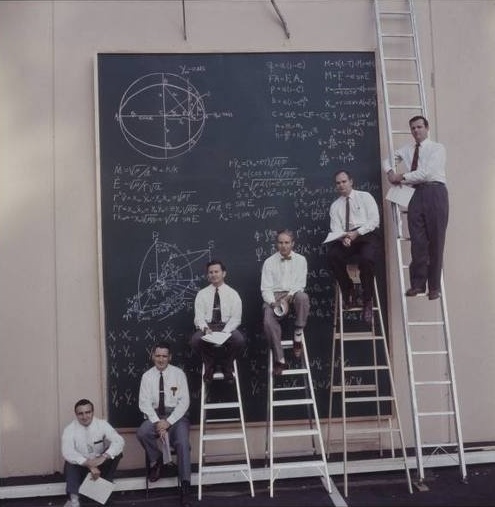 There are several professional societies for mathematicians. The two main professional societies are the AMS and MAA.
 - The American Mathematical Society (AMS) is dedicated to the interests of mathematical research and scholarship, and serves the national and international community through its publications, meetings, advocacy and other programs.
- The Mathematical Association of America (MAA) works to advance the mathematical sciences, especially at the collegiate level, through education, research, professional development, public policy, and public appreciation of mathematics.
Sometimes the differences between the AMS and MAA are summarized as "The MAA is more concerned with mathematics education, while the AMS is aimed more at professional mathematicians". While there is some truth in this, it is a large oversimplification. The AMS and MAA are both interested in mathematics education at all levels as well as research mathematics, but their missions place different emphasis on various issues within education and research.
As a graduate student, you should consider joining other professional societies as well. Membership information can be found on each society's website, and you should be aware that the student rates for membership are much cheaper than faculty rates. As a member of a professional society, you receive the monthly publications of the society, discounts on books and conference registrations through that society, mathematics and society news, information about mathematics opportunities, and access to certain online information. Your membership also supports the mathematics community and shows a level of professionalism that future employers like to see.
In addition to the AMS and MAA, some other popular mathematics societies with more specialized roles are the following:
- The Society for Industrial and Applied Mathematics (SIAM) exists to ensure the strongest interactions between mathematics and other scientific and technological communities.
- The Association for Women in Mathematics (AWM) encourages women and girls to study and have active careers in the mathematical sciences, and promotes equal opportunity and the equal treatment of women and girls in the mathematical sciences.
- The American Statistical Association (ASA) is the nation's leading professional association for statistics. Also see their Flyer for Student Resources.
- The Society of Actuaries (SOA) is an educational, research, and professional organization dedicated to serving the public and Society members. The SOA's vision is for actuaries to be the leading professionals in the measurement and management of risk.
- The American Academy of Actuaries (AAA) The American Academy of Actuaries is a professional association whose mission is to serve the public and the U.S. actuarial profession. Academy members include consultants, corporate executives and staff, regulators, government officials, academicians, and retired actuaries. Their areas of practice cover pensions, life insurance, casualty insurance, health insurance, financial reporting, risk management, and more.
Even if you are not a member of a particular society, their website can often be a source of very useful information for you. In particular, the AMS and MAA both have a list of resources for students on their websites, and these are accessible to everyone.
- AMS list of resources for mathematics graduate students
- MAA list of resources for graduate and undergraduate students
- AMS list of Graduate Student Travel Grants
- AMS list of Other Sources of Funding
4. Online Resources for Research and Learning
Books and Papers
- The arXiv preprint server. Almost all mathematicians post their preprints on the arXiv, as well as updates to the preprints. You can search, browse the new and recent submissions, or subscribe to a mailing list to be updated on recent submissions. You can also do everything by category. Once you have decided on an advisor and research area, you should subscribe to the arXiv mailing list in the relevant categories. You will receive an email about once per week with all new submissions and updated replacement submissions in your chosen categories. This is a great help for keeping updated on progress and advancements in your field. (Note: The arXiv itself is located at http://arxiv.org, but a front end that is sometimes easier to navigate is maintained by UC Davis at http://front.math.ucdavis.edu.)
- MathSciNet. You can look up published papers and read reviews on MathSciNet, as well as obtain information for bibliographies of papers you may be writing. If our library has an electronic subscription to a journal, you can also access electronic copies of papers through MathSciNet. (Note that MathSciNet requires a subscription, so to use it you must login through the library using your CougarNet ID.)
- Everything in Its Right Place: An Expert Guide to Searching with MathSciNet, Part I by Edward Dunne, published in the AMS Notices, September 2019
- Everything in Its Right Place: An Expert Guide to Searching with MathSciNet, Part II by Edward Dunne, published in the AMS Notices, October 2019
- The Mathematics Autodidact's Aid by Kristine K. Fowler is a list of books for the autodidact (self-educated person) published by the AMS.
- My Own List of Textbook Recommendations for students interested in learning various mathematical topics.
Answering Questions
- Math Stack Exchange is a question-and-answer web site for math questions at any level.
- MathOverflow is a question-and-answer web site for research-level math questions or other questions of interest to professional mathematicians.
- Wikipedia actually has a number of very well written articles on advanced mathematical topics. These articles can often be used to answer basic questions. However, keep in ming that as with any encyclopedia, Wikipedia is a starting point ---not an ending point--- for academic research. Also, you may ask: "Should one cite Wikipedia in research papers?". Wikipedia says "no", and here is a Wikipedia article discussing the issue.
Advice for Reading Papers
Here is some advice for students reading papers for the first time:- Begin with the abstract to see if you're interested.
- Read the introduction and conclusions with extra focus on the main ideas and results.
- Skim the middle sections to get a feel for the flow, pay special attention to main theorems.
- Read select parts in more detail. Feel free to skip around depending on your level of interest and how much detailed info you need.
- When an especially deep understanding is required, it may be necessary to go back and read the entire article from start to finish.
5. Attending and Giving Talks
Attending Talks, Colloquia, and Seminars
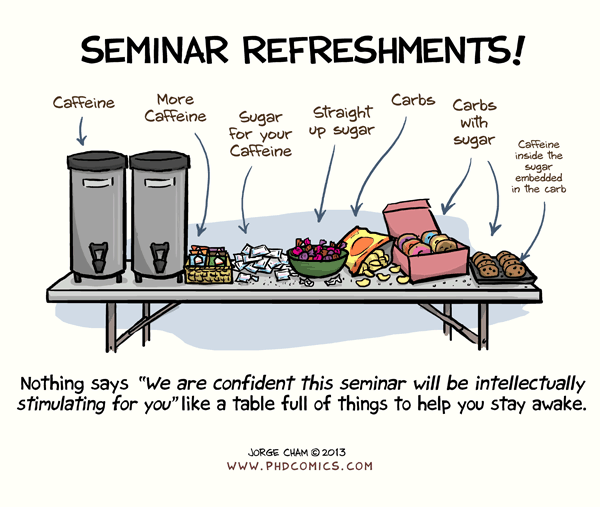 It is a good idea to attend colloquium talks as well as some of the research seminars in your department. Although research seminars are usually fairly specialized, in your first and second years of graduate school you can sample a few to help you decide which area you want to go into. After you choose a research area and advisor, it is likely that you will regularly attend a seminar series relevant to your subject.
 Unfortunately, many colloquia and seminar talks are often bad; usually because they are too technical and difficult for non-experts to follow. Despite this, it is still beneficial for you and necessary for your professional development that you attend them. (Remind yourself that one useful talk is often worth attending ten bad talks.)
Try to get something out of every talk. Gain exposure to new ideas. Learn what topics are at the forefronts of research right now. Learn the concepts and words that come up in current research. Learn (perhaps by counterexample) what the elements of a good talk are. In addition, strive to understand at least some small part of every talk you attend. Here is some advice for doing so:
- The "Three Things" Exercise for Getting Things out of Talks by Ravi Vakil (also in PDF)
Giving Talks and Presenting Your Work
 To have a career in mathematics you will need to give frequent talks on your work. The following are several guides containing suggestions for giving an effective mathematics talk.
 - Resources For Presentations maintained by the MAA
- How to Talk Mathematics by Paul Halmos (also in PDF)
- How to Give a Good Talk by Joseph Gallian
- How to Give a Good Power Point Presentation by Joseph Gallian
- Technically Speaking (see about) is an NSF-funded project that provides videos to help students learn good skills for giving mathematics talks.
- Terence Tao gives some speaking advice, in which he reminds us to be considerate of our audience, and that talks are not the same as papers.
- The (Martial) Art of Giving Talks by Matilde Marcolli (contains some nice sections on dealing with disruptive audience members)
- Giving a good talk: a single premise, looking into audience eyes a video created by Uri Alon (also written as a paper)
- Giving a Job Talk by Michael A. Jones and Karen Saxe
- How to Give a Good Colloquium Talk by John McCarthy (First line: "Most colloquiua are bad.")
- Presentations Myths by Richard A. Becker and Sallie Keller-McNulty
- Developing an Interview Lecture by John Swallow
- How to give a good 20 minute math talk (also here) by William T. Ross
- Suggestions for Creating a Quality Academic Poster taken from an article by Steven Block
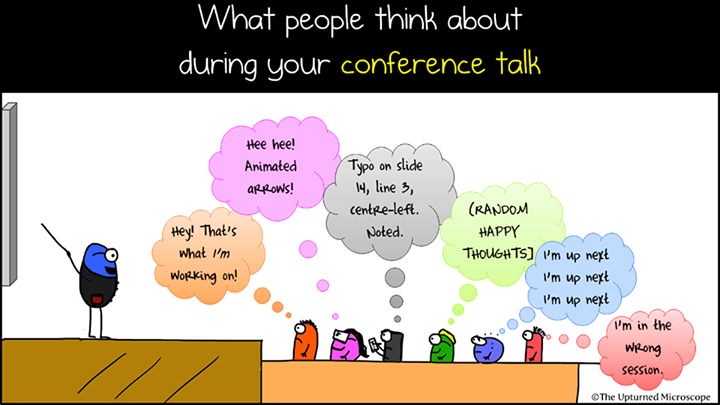
- This comic describes what often happens at talks despite your best preparation.
6. Mathematical Writing
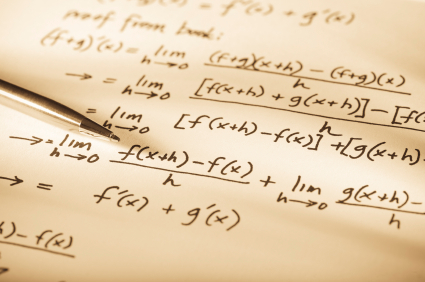 Here are some resources for Mathematical Writing.
 - Mathematical Writing: A Brief Guide is a handout I've written for graduate students who are beginning to do mathematical writing for the first time in their careers.
- Guidelines for Good Mathematical Writing by Francis Su.
- How to Write Mathematics by Paul Halmos is also an excellent guide to writing. In addition, there is a two-page summary of Halmos' article written by Peter Cameron.
- Mathematical Writing by Donald E. Knuth, Tracy Larrabee, and Paul M. Roberts are the notes/text from a course on writing given by the authors at Stanford University in Fall 1987. In addition, here is a list of errata.
- Ten Simple Rules for Mathematical Writing by Dimitri Bertsekas contains some good advice.
- Writing a Math Phase Two Paper by Steven Kleiman was written for students at MIT, but contains great writing advice relevant to all mathematics writing.
- A Primer of Mathematical Writing by Steven G. Krantz can be purchased on Amazon.com or the AMS Bookstore.
- Writing Resources are links I maintain on my website for both mathematical writing and general writing.
- LaTeX Resources are links I maintain on my website aimed at both beginners and experts in LaTeX.
7. Teaching Experience
 If you are planning on having a career in academia (even one with a large research component), then teaching will be an important part of your future duties.
 - We Must Prepare Ph.D. Students for the Complicated Art of Teaching (and in PDF) is an article from the Chronicle of Higher Education describing how teaching skills are very important for graduate students entering the academic market, and yet most graduate programs do not do an adequate job of preparing their students to teach.
Summer Teaching Opportunities
If you want to use the summer to gain teaching experience, there are many K-12 mathematics summer programs that seek (and pay) graduate students and faculty to assist with teaching. Here are a few:- BEAM -- Bridge to Enter Advanced Mathematics is an excellent program working to create educational pathways for underserved students. They have numerous summer programs for which they hire instructors and counselor/TAs.
- The Center for Talented Youth (CTY) at Johns Hopkins University is a very well-known and well-respected program for K-12 Students. They have a page with Information about Summer Employment.
- Summer Math Camps and Programs for Pre-College Students is a list maintained by the American Mathematical Society.
Teaching Resources
- How to Teach Mathematics by Steven G. Krantz
- The Legacy of R.L. Moore Project contains information about the Moore method. Their events page contains a list of conferences related to Inquiry Based Learning (IBL), and the annual "Legacy of R.L. Moore -- IBL Conference" is often held in Texas.
- The Journal of Inquiry-Based Learning in Mathematics (JIBLM) publishes university-level course notes that are freely downloadable, professionally refereed, and classroom-tested. Looking through these articles can be a great way to get ideas for your own classroom.
Some Advice as You Develop Your Teaching Skills
- In addition to lecturing, experiment with nontraditional teaching methods; e.g., discovery-based learning, inquiry-based learning, modified Moore methods, group work, interactive techniques such as the use of "clickers", assigning projects or writing activities, or using technology in the classroom.
- Form a Teaching Group or Teaching Seminar; i.e., find a group of like-minded students, postdocs, or faculty interested in teaching who would be willing to meet regularly to discuss teaching methods and experiences in their classrooms that semester.
8. Summer Programs for Graduate Students
- The National Security Agency (NSA) has a list of Programs for Graduate Students.
- Park City Math Institute (PCMI) is a 3-week mathematics program held at Park City, Utah. The mathematical topic changes from year to year. Participating groups include mathematics educators, undergraduate students, graduate students, and mathematics researchers. There are individual courses of study within each of these groups, as well as a meaningful amount of interaction among the groups. The rich mathematical experience combined with interaction among all participants results in greatly increased understanding and awareness of the issues confronting mathematics and mathematics education today.
- AMS-AAAS Mass Media Fellowship is a highly competitive program designed to improve public understanding of science and technology by placing advanced science, mathematics, and engineering students in newsrooms nationwide. Fellows work with media professionals to improve their communication skills and increase their understanding of the editorial process by which events and ideas become news.
- AMS Congressional Fellowship allows the fellow to spend a year working on the staff of a Congress member or on a congressional committee, assisting in legislative and policy areas that require scientific and technical input.
- Also see the Teaching Experience section for summer programs that provide teaching experience.
9. The Academic Job Search
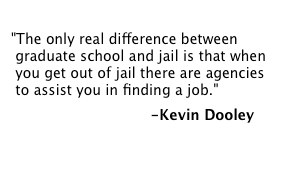
Here is a page with advice for students applying for academic jobs.
Students who are interested in non-academic jobs should refer to SIAM's list of Careers in Applied Mathematics.
10. Harsh Realities
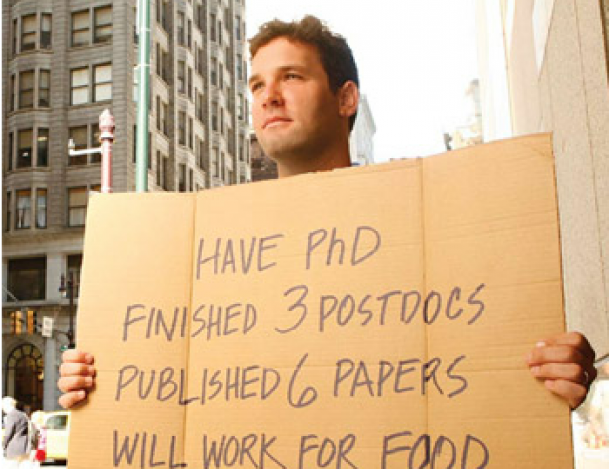
"[O]f all the machines that humanity has created, few seem more precisely calibrated to the destruction of hope than the academic job market." ---Dr. Patrick Iber (At the time he wrote these words, Dr. Iber had a Ph.D. from the University of Chicago, a book contract with Harvard University Press, and a visiting lectureship at UC Berkeley.)
The drop-out rate in mathematics graduate programs throughout the U.S. is high, and the academic job market for Ph.D.s is highly competitive.
Furthermore, in academic jobs, the path to tenure has become longer and more difficult over the past few decades. More positions require postodctoral experience, there is greater emphasis placed on obtaining grants and external funding, and typical number of years to earn tenure and promotion has increased. In addition, the hiring of more and more adjunct faculty and lecturers has led to a decrease in the number of faculty positions and more exploitation of academics with Ph.D.s.
It is important to be aware of these issues and prepare for them The information here is meant to help you, not to discourage you. It is intended to help you make an accurate assessment of the current state of graduate programs and job markets for Ph.D.s, so that you can make informed decisions and plan for the future. It is important for all graduate students to start preparing for jobs and gaining skills to make themselves marketable in the early stages of their graduate career, long before earning their degree and applying for jobs.
Thoughts on Graduate School
- 100 Reasons NOT to Go to Graduate School. Although stated somewhat negatively, the posts on this site describe many difficult and problematic aspects of academia in a very accurate and even-handed way. Although its focus is on the humanities and social sciences, almost everything the blog discusses is relevant across academic disciplines, including mathematics.
- The article discusses the role that the prestige of your graduate institution plays. It reports that a mere 25% of institutions produce 71-81% of all tenure-track faculty.
The Adjunct Crisis
- The Loss of Tenure Positions: Threats to the Profession (and in PDF), a blog post by David Bressoud, director of the CBMS.
- Women in the Profession (and in PDF), a blog post by David Bressoud, director of the CBMS.
- Infographic on the Growing Adjunct Crisis
Data on the Profession
- If you look at the "Mathematics" row in the following chart of Data on Doctorates Awarded, you can see that the number of mathematics Ph.D.s awarded in the U.S. (to both U.S. citizens and non-U.S. citizens) was 1,050 in 2000 and increased steadily to 1,554 in 2009. In addition, the following report from the AMS shows there were 1,957 Ph.D.s awarded in 2017. Note that this means the number of Ph.D.s awarded from 2000 to 2017 has approximately doubled. Considering the rapid rate at which the number of mathematics Ph.D.s awarded is increasing, combined with the fact that the number of jobs (particularly tenure-track faculty positions) for mathematics Ph.Ds is decreasing, you get a sense of the difficulties in the mathematics Ph.D. job market.
- The AMS site with data on the profession contains data and statistics on mathematics education, PhD production, faculty size and salaries, employment trends, and demographics in the Annual Survey, the CBMS Survey, and other government data reports.
- The Mathematical and Statistical Sciences Annual Survey collects information each year from departments in the mathematical sciences at four-year colleges and universities in the United States. The column on the left of this site allows one to see data and statistics related to graduate students, Ph.D.s awarded, faculty, and salaries.
Postdoctoral Positions and Tenure
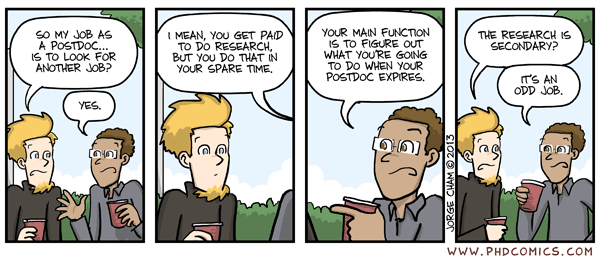
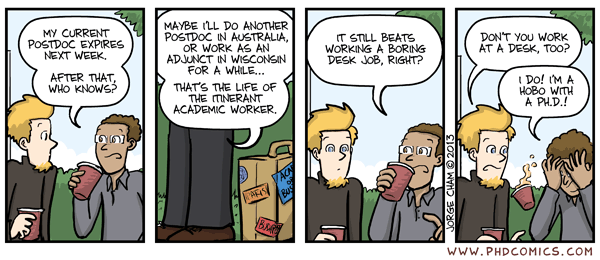
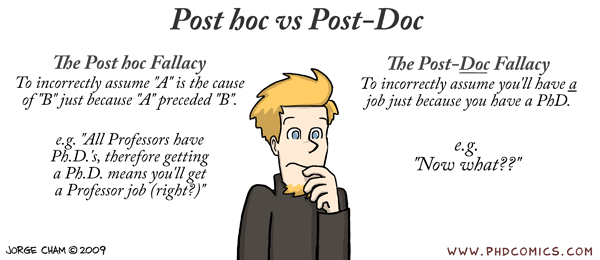
To get a tenure-track job at a research university, you will need to do at least one postdoc. The following comic strips from Ph.D.Comics give you a sense of the impermanence of these positions, and the uncertainty of future employment, as you try to get your next position. 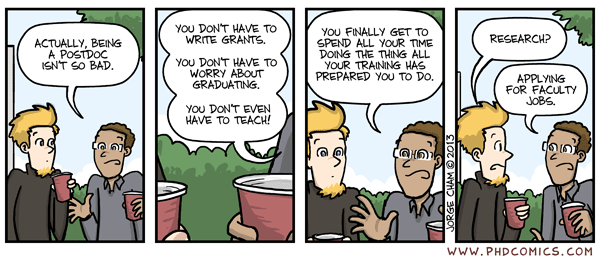
The Perils of Tenure
- "The Tenure Chase Papers" is a memoir by Dana Mackenzie about his candidacy for tenure at Kenyon College, which ultimately ended with him being denied tenure and released from his position.
From author: "The Tenure Chase Papers" is a tale that is full of unexpected twists and turns and good lessons for young professors on the tenure track. It draws back the veil of secrecy surrounding the most critical career hurdle for anybody in academia. It sometimes seems taboo to speak of tenure, but when things are left unspoken, lessons are left unlearned. . . . I still think that there are very serious questions about the wisdom of the tenure system. Does this all-or-nothing hurdle make sense in the modern world? Suppose we concede for a moment that universities should grant tenure only to faculty who are truly outstanding in every way. Why should the penalty for being not-quite-outstanding be that you are essentially fired? I don't know any other profession that conducts its business in such a self-defeating way.
The website www.phds.org said "[The Tenure Chase Papers] is required reading for all academics and would-be academics". The full story was published in the book Starting Our Careers (American Mathematical Society, 1999), pp. 79-100. You can also read it on Dana Mackenzie's Website or here: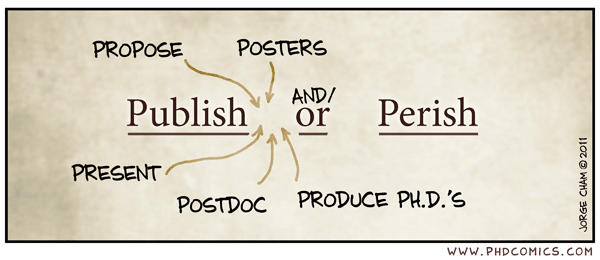
- Tenure Chase Papers, Introduction
- Tenure Chase Papers, Part 1: Prehistory
- Tenure Chase Papers, Part 2: The Axe Falls
- Tenure Chase Papers, Part 3: Grievance
- Tenure Chase Papers, Part 4: Double Jeopardy
- To end on a slightly happier note, see the following article that suggests taking a positive attitude during your time prior to the tenure review: The Awesomest 7-Year Postdoc or: How I Learned to Stop Worrying and Love the Tenure-Track Faculty Life from Scientific American (also in PDF).
Krantz A Primer Of Mathematical Writing Pdf
Source: https://marktomforde.com/academic/gradstudents/gradstudents.html
Posted by: kohndeabinder.blogspot.com
0 Response to "Krantz A Primer Of Mathematical Writing Pdf"
Post a Comment